Turning an ambitious destination vision into an investable development proposition
The Tangle
A major destination can begin with a compelling idea. But an idea alone does not secure land, government support or investment.
As part of the wider Lagunas Ecocity vision in the North, Peru, well known architect and project initiator Adolfo Luque developed the ambition for El Reino del Señor de Sipán: a major leisure, cultural and destination-development project inspired by the heritage of northern Peru.
The opportunity was substantial, but so was the complexity.
Before such a project could move towards development, different audiences needed very different answers.
Government bodies needed to understand the spatial concept, economic relevance, environmental context and development requirements.
Potential investors needed to see an understandable proposition, development logic, phasing, financial assumptions and a credible route towards implementation.
And the individual disciplines (architecture, entertainment, infrastructure, sustainability, finance, regulation and operations) needed to become parts of one coherent project rather than separate ideas.
The wider Lagunas Ecocity concept itself brings together sustainable residential development, tourism, leisure, infrastructure, renewable energy, water management and other components across a large coastal development.
The Disentangler
I worked alongside Adolfo Luque during the project-initiation phase, concentrating particularly on translating the leisure and destination vision into structured development documentation.
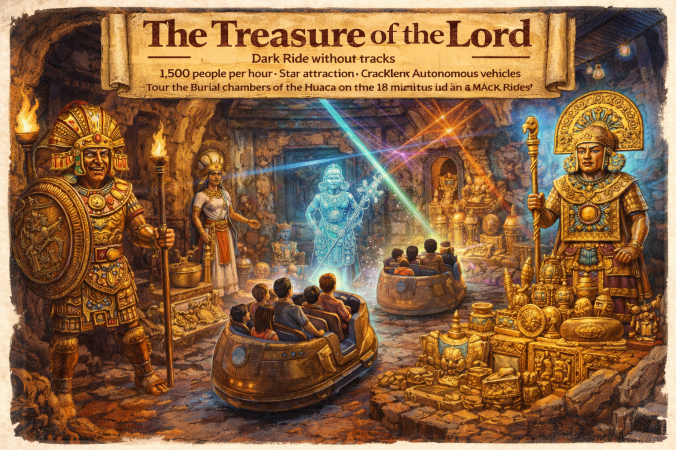
My role was not to replace the specialist disciplines around the project. Adolfo and his team worked on architectural, environmental and locally required development documentation.
My contribution focused on connecting the vision with the business, destination-development and implementation logic needed to explain the project to decision-makers and prospective partners.
This included work on:
- the project masterplan and development structure;
- financial and investment planning;
- project and development documentation;
- phasing and implementation logic;
- attraction, resort and visitor-experience strategy;
- investor-facing project material;
- and the overall narrative connecting the cultural vision with a viable destination proposition.
The resulting planning framework considers not only attractions, but infrastructure, hotels, operations, sustainability, visitor capacity, project phasing, regulatory requirements, investment and implementation.
The Disentangling
The task was to transform a very ambitious idea into something that different stakeholders could understand, interrogate and make decisions about.
That meant repeatedly moving between very different perspectives.
Vision:
What should El Reino del Señor de Sipán ultimately become?

Experience:
Why would people travel there, and what would make the destination distinctive?
Masterplanning:
How should the individual attractions, resort components and supporting infrastructure work together?
Business:
Where would revenue come from, what investment would be required and how could development be phased?
Implementation:
What studies, approvals, partnerships and specialist disciplines would be required before construction could begin?
Investment:
How could a large conceptual vision be translated into documentation suitable for conversations with international investors?
The planning material evolved into a much broader development framework covering legal and regulatory requirements, site analysis, architecture, attractions, infrastructure, sustainability, operations, construction phasing, CAPEX, business strategy and consultant requirements.
The project documentation also explicitly provides for investor presentations and materials for different audiences including investors, partners and government.
That is an important part of the story:
we were not only designing what the destination could be; we were building the argument for why and how it could exist.
The Disentangled Result
The result of the initiation work was not a completed theme park.
It was something necessary much earlier in a project of this scale:
a structured development proposition.
The combined project documentation became substantial enough to support discussions with government institutions and prospective international investors, including contacts from Asia and the Middle East.
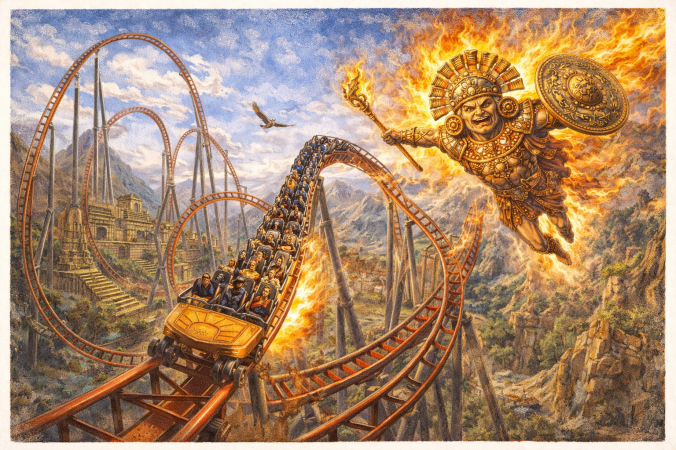
Financial projections, project phasing, masterplanning, regulatory requirements and investor communication were brought together into a coherent development framework. The project documentation includes detailed cash-flow and financing structures, investor-facing presentations and extensive planning of the approvals and specialist studies required for later development stages.
Progress has nevertheless depended on something no masterplan can completely control: the institutional environment around the project.
Frequent changes in political leadership and administrative priorities in Peru have repeatedly affected decision-making and timelines. The project therefore remains in development while local and national approvals and decisions continue to evolve.
Large-scale development is rarely a straight line from concept to construction. Sometimes the real work is creating enough structure, credibility and resilience for an ambitious idea to survive the years.
Note: None of the used imaged are part of the actual project portfolio.

